Knowledge base
Earthworks and volumes
A design model does more than guide the machine: it also helps you understand the earthworks — where material is cut, where it is filled and how much. What such a volume calculation tells you, and what it does not.
Comparing two surfaces
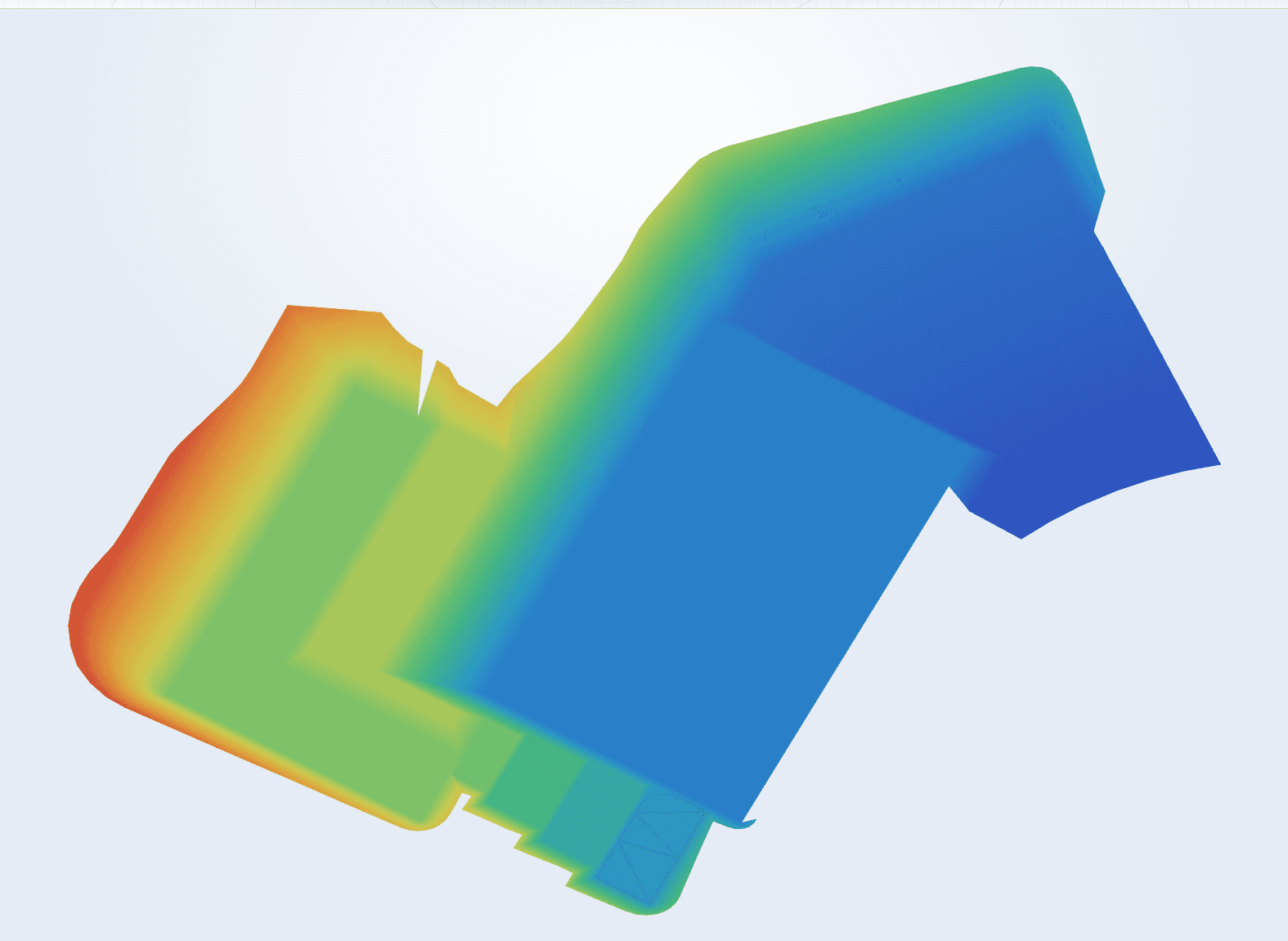
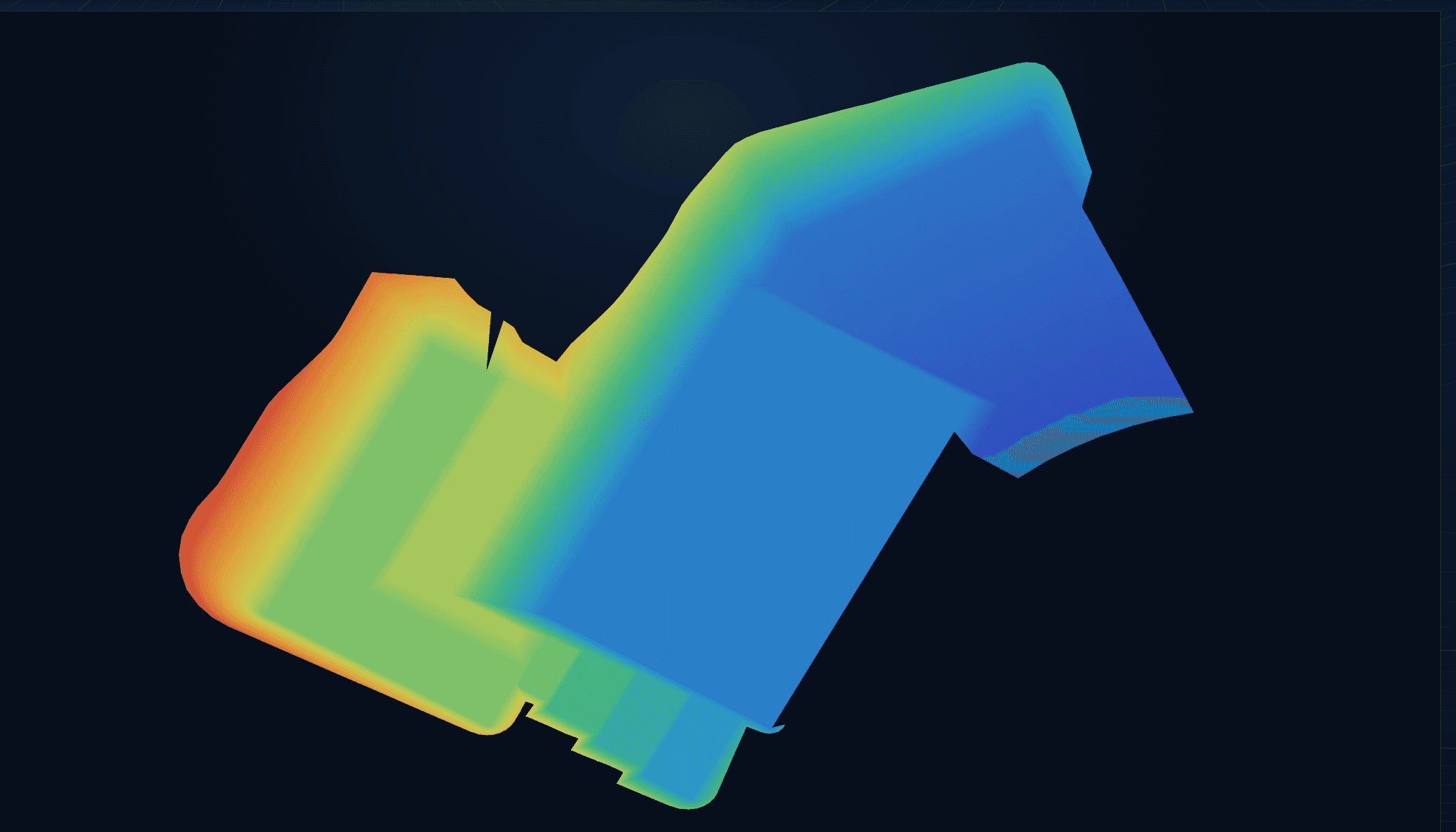
A volume is found by comparing two surfaces: the existing ground, as surveyed, and the design surface. At every location the difference in level between the two is determined and then summed over the whole working area.
Where the existing ground is higher than the design, material has to be removed: that is cut. Where it is lower, material has to be added: that is fill. A map showing both zones in colour makes it clear at a glance where the bulk of the work lies.
Earth balance
The earth balance sets the total cut volume against the total fill volume. If there is more cut than fill, surplus material has to be taken off site. If there is more fill, material has to be brought in.
Keep in mind that soil changes volume. Excavated soil takes up more space than it did in the ground (bulking), and compacted soil less. On top of that, not all excavated material is suitable for reuse. A geometric balance is therefore a starting point for planning haulage and materials, not the final answer.
Layers and why thickness matters
Beneath a pavement there are usually several layers, such as a sub-base and a base course. Each layer has a design thickness. If the calculation runs to finished level rather than to the bottom of the build-up, the cut is underestimated.
That is why layers are best modelled as separate surfaces. The cut volume can then be determined down to formation level, and the volume of material needed for each layer. A few centimetres of difference in layer thickness seems small, but over a large area it adds up quickly.
Indicative, not a guarantee
A volume is never more accurate than the surfaces it is calculated from. A survey with few points, an outdated survey or ground that has changed since gives a volume that differs from reality. Vegetation, temporary stockpiles or standing water at the time of the survey also affect the result.
Volumes from the model are therefore a by-product of the modelling work and are indicative. They help with estimating and planning, but they are not guaranteed quantities for payment or a bill of quantities. For contractual quantities, the surveyor’s measurements and the terms of the specification remain decisive.